Practice note 02: Refurbished equipment
Refurbished medical equipment financing, and the inspection that should come first
A refurbished system can be the best buy in the practice or a slow leak. The difference is usually in paperwork you can ask for before you sign.
Refurbished medical equipment is pre-owned equipment that a reseller or the original manufacturer has inspected, repaired and tested back to its original specifications. It can be financed much like new equipment, with the unit as collateral. Expect the lender to ask who refurbished it, what warranty comes with it and how old it is, because those answers set the term.
Used, refurbished, remanufactured: what is the difference?
Sellers use these words loosely, and the difference matters to you, to your service provider and to us. The definitions below are the ones we work from when reading a quote.
| Label | What has been done | What to ask for |
|---|---|---|
| Used, as is | Nothing beyond removal and perhaps cleaning | Service history from the last owner, a power-on test if you can get one |
| Refurbished | Inspected, worn parts replaced, tested to the original specifications | The refurbisher's test report, a parts list, the warranty in writing |
| Manufacturer certified | Refurbished by or for the original manufacturer under its own program | The certification document and whether it carries the new-equipment service terms |
| Demo or ex-show | Lightly used by a dealer for demonstrations | Hours or usage counters, and whether a full new warranty applies |
| Remanufactured | Changed beyond original specifications, or its intended use changed | Regulatory status. The FDA treats remanufacturers much like manufacturers |
The last row is a regulatory line, not a marketing one. The FDA's guidance on remanufacturing separates servicing, which returns a device to its original safety and performance specifications, from remanufacturing, which significantly changes them. Most refurbishers you will deal with are servicing. If a seller describes upgrades that sound like more than that, ask how the work was cleared. The FDA medical devices pages are the primary source.
What does a refurbisher actually replace?
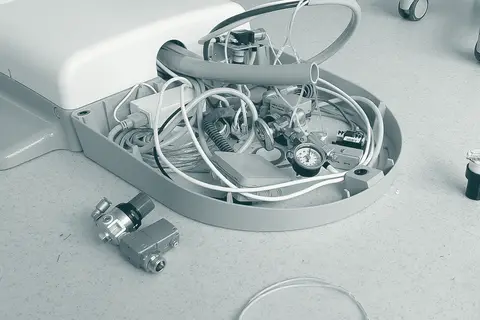
On most equipment, the parts that wear are a short list, and a good refurbisher can tell you which were renewed and which were tested and left. That list is more useful than any adjective in the listing. A few examples from the categories we see most:
| Equipment | Wear points | Evidence worth asking for |
|---|---|---|
| Dental chair and delivery | Hydraulics or motor, valves, tubing, upholstery, foot control | Parts replaced; whether parts for that model are still made |
| Ultrasound | Transducers, cables, the monitor | Transducer test results; software version and whether it can be updated |
| CT | X-ray tube, detector | Tube usage history and whether a new tube is included |
| C-arm | Tube, image intensifier or flat detector, the mechanical arm | Image quality test and detector type |
| Aesthetic laser or IPL | Flashlamp or diode stack, handpieces, cooling | Pulse counts, handpiece serial numbers, manufacturer transfer status |
| Autoclave | Door gasket, heating element, sensors | Recent validation and the chamber's condition |
| Anesthesia machine | Vaporizer, flowmeters, valves | Vaporizer calibration date and a leak test record |
An inspection record you can fill in
We do not inspect equipment, and we are not the right people to say whether a unit is clinically fit. What we can do is tell you which questions, answered in writing, make a used unit easy to finance and easy to live with. Print this list, take it to the seller, and keep the answers with your file.
- Make, model, serial number and year of manufactureThe serial number goes on the financing documents. Make sure it matches the unit.
- Who refurbished it, and are they the seller?
- Written list of parts replaced, and test results after refurbishment
- Warranty: length, what it covers, and who honors it
- Is the manufacturer still making parts and software for this model?An end-of-support date shortens the useful life, and so the term.
- Usage counter readings, where the equipment has them
- Who will service it after the warranty, and have they agreed to?
- Transfer or relicensing fees charged by the manufacturer, if any
- Delivery, rigging and installation: included or quoted separately?
- Clear title: no existing lien or lease on the unitAsk a private seller directly. A unit still under someone else's lease cannot be sold.
How do age and condition change the financing?
A lender will not usually finance equipment over a term longer than it is likely to stay in service. So a refurbished unit with plenty of life left and a manufacturer still supporting it can carry a term close to what new equipment would get, while an older unit near the end of its support may be limited to a shorter term. That is a sensible constraint from your side too. A payment that outlives the equipment is the worst outcome in equipment finance.
Private sales, such as one practice buying another's chairs or imaging, can be financed. The file needs a little more: proof the seller owns the equipment outright, the serial numbers, and some evidence of condition. A bill of sale is drawn up and we pay the seller directly, the same as we would pay a dealer.
An orthopedic practice compares a new C-arm with a refurbished unit of the same family from an established reseller, which comes with a 12-month parts and labor warranty and a new image detector. The refurbished quote is $68,000 against $142,000 for new. Spread over 60 months before any finance charge, that is $68,000 ÷ 60 = $1,133.33 a month in principal against $142,000 ÷ 60 = $2,366.67. Whether the gap is worth it depends on the warranty and the support horizon, which is why both belong in the comparison.
Common mistakes with refurbished equipment
- Comparing a refurbished price with a new price without pricing the service contract for each.
- Assuming the manufacturer will service any unit. Some will not touch a device until it has been recertified or transferred, for a fee.
- Paying a private seller before checking for an existing lien or lease on the unit.
- Leaving delivery and rigging off the budget. For heavy imaging, they are not small.
Refurbished equipment questions
Is refurbished equipment financed at a different rate from new?
It can be. Rates are set file by file, and the age of the collateral and the length of the term are part of the picture along with the practice and its credit. A soft pull shows you the actual terms for your file.
Can I finance a unit I am buying at auction?
Sometimes. Auction purchases usually require payment within days and come as is. Talk to us before you bid, not after, so you know whether the timing works.
Can the warranty be included?
A warranty that comes in the purchase price is part of the equipment cost. An extended service contract bought separately is usually kept outside the financing.
References
- U.S. Food and Drug Administration. Medical Devices, including guidance on remanufacturing and servicing of medical devices.
- Internal Revenue Service. Publication 946. Used equipment can qualify for Section 179; ask your tax advisor.